Friday, December 15, 2017

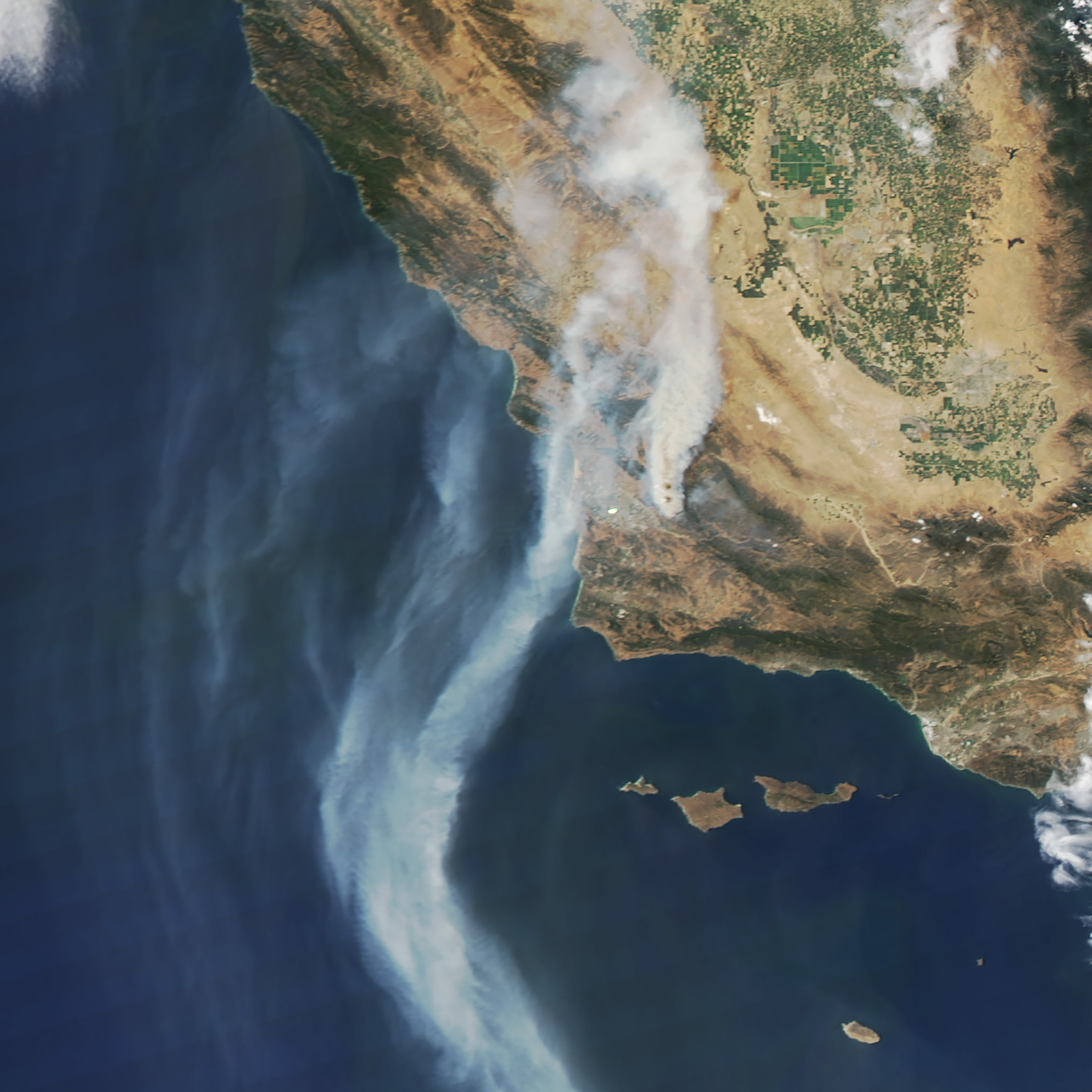
Wildfires in the Western United States, why not the East?

     Ever since people have settled in the United States, wildfires have occurred numerous times. From the Washington D.C. blaze set off by the British, to the Chicago Wildfire of 1871, wildfires and fire in general have scorched many cities, forests, and towns. However, in the present, there has been mostly wildfires in the Western United States. The East has been free of them, but the West is not. Will the West ever being scorch free like the East?
     The western part of the United States has a much lower population density for mostly everywhere except California and a few major cities like Portland Oregon or Denver Colorado. However, there is plenty of forests and infrastructure that are flammable as a result. For example, the west did not start getting settled till 1850 and wasn't a frontier until 1890. Over half of the United States' National Parks are also located here in the West along with many U.S. National Forests and State Parks. A lot of the land outside of those major cities is not settled leading to many possibilities of wildfires.

     Secondly, only in these suburban areas is where many people settled as that was the land that wasn't rugged or extreme in weather phenomenons. These wildfires can then easily start and not stop as a result with the rugged terrain of the west. It makes it difficult for these firefighters to go up and down the rolling mountains of the west to continue to stop these wildfires. Not only that, but extreme winds high up in the mountains help spread these blazes that become hard to stop. In California right now, shifting Santa Anna winds from the Pacific help spread these blazes from one area to the next.
      The obvious reason for all of this however is the drought. All of the rain that we had in California last year hasn't happened since. As a result, a lot of the vegetation in the West is more vulnerable to wildfires and when they start, they become very hard to stop.

Image result for california wildfires
   
  So why not the East then? The eastern United States with the exception of the Appalachians has a very high population density. There are forests in this part of the country, but thanks to the moisture from the Gulf of Mexico and the Atlantic Ocean, this area does not go into droughts as often. There are not as many National and State Parks because the conservation movement did not start until the West was getting settled in the early 1900s.
     The Western United States may experience these wildfires often, but the natural geography and the natural weather phenomenons of the west all have led to why the West is more vulnerable to these than the East.

Friday, December 1, 2017

Hurricanes Season 2017. Worse than 2005?

     As we closed this hurricane season out yesterday, November 30, much of the world looks back and is thankful that it is done. 3 U.S. Category 4 hurricane landfalls in 2 months which include Harvey, Irma, and Maria, 10 straight hurricanes in the Atlantic, one category 1 land falling U.S. hurricane named Nate,  a hurricane named Ophelia that disrupted Ireland and the United Kingdom, and a total of 16 named storms. However, while many people think this is the worst hurricane season ever, is it really?
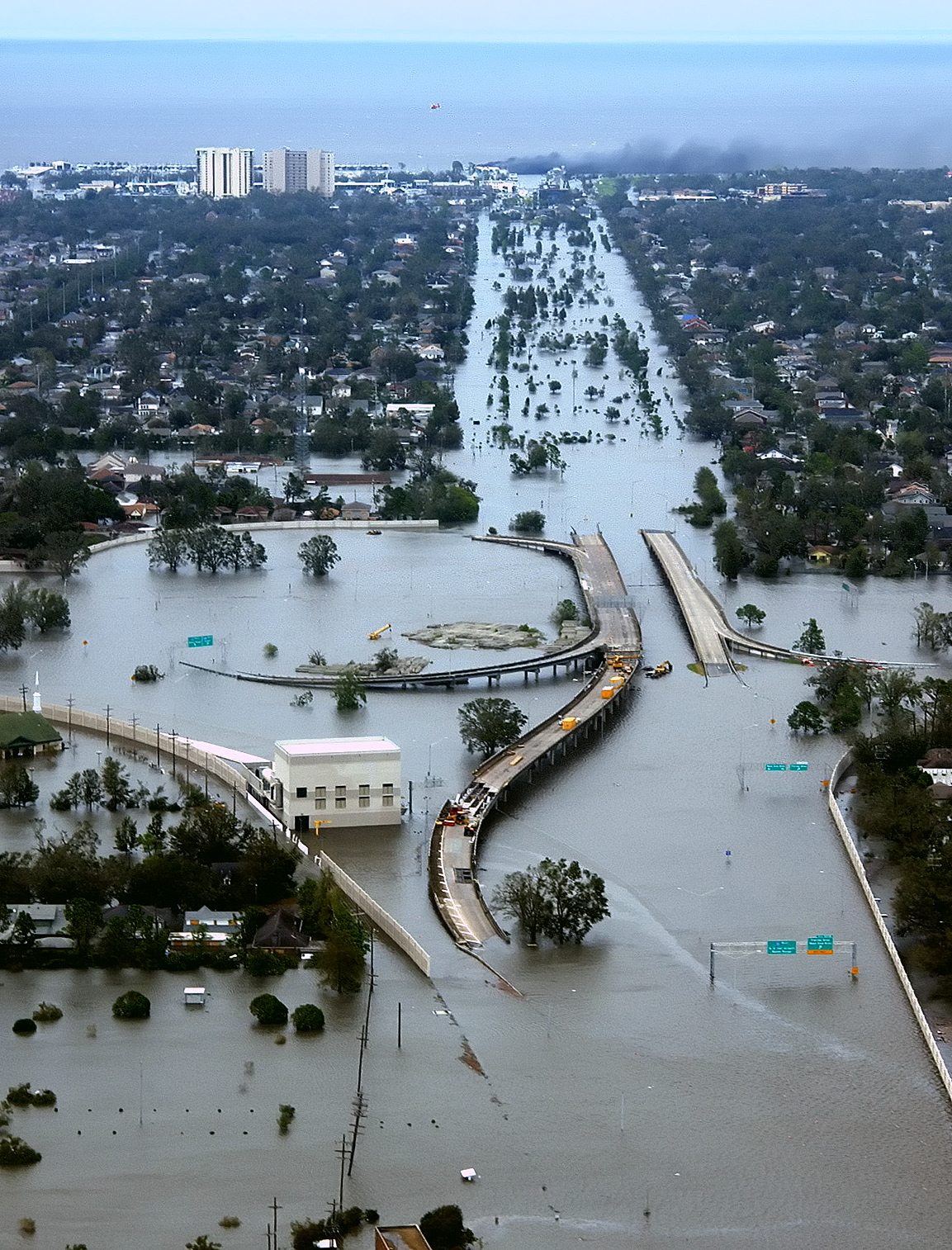
Image result for hurricane katrina
     Let's look back to the year 2005. All 21 names on the hurricane list and 7 more all had to be used for this record season. It even went two months beyond the normal Atlantic hurricane season!  One major hurricane of many that caused massive devastation was hurricane Katrina. This one caused $108 billion dollars in damage and actually made U.S. landfall not once, but twice in the United States. Hurricanes Cindy, Dennis, Rita, Ophelia, and Wilma were among the other hurricanes to strike the United States that year. Wilma, had been the strongest of these with over 180 mph winds. These hurricane names for the most part retired.  However, every 6 years, this particular name cycle is bought back with some of the different and same names and 2017 just so happened to be two cycles after 2005.
Image result for hurricane harvey
(Hurricane Harvey)

     2017's hurricane season was one of the most devastating and destructive seasons on record as we know. Compared to 2005, it had 12 fewer named storms, but for about a month and a half, it had recorded 10 straight hurricanes which tied a record for longest number of hurricanes in a row. It had the hurricanes Harvey, Irma, and Maria all struck the U.S. within 3 weeks of each other. Irma, was the strongest of these with at one point close to 200 mph wind speeds! Harvey dumped over 45 inches of rain for a week in Texas, and hurricane Maria devastated the island Puerto Rico which still is in need of help to recover. Not to mention, there were other hurricanes like Nate, Jose, and Ophelia that all added damage to the U.S in Mississippi and Cape Cod, most of the Virgin Islands, Hispaniola, Central America, and Europe.
     2017 and 2005 hurricane seasons were both very costly hurricane seasons. However, 2017 proved to be more costly than 2005 with more than $200 billion dollars in damage compared to 2005 where there was $159 billion. Everyone looks at this season we just had and may say it was the worst ever, but looking back, you just can't compare. Harvey like Katrina caused massive flooding. Irma like Wilma caused massive wind damage. Cindy like Nate hitting the central Gulf coast as a category 1. Maria may have leveled Puerto Rico, but hurricanes Rita and Dennis also ravaged the U.S.
     You may be able to compare costs of hurricane seasons and say 2017 was worse than 2005. You may be able to compare sheer number of storms and say 2005 was worse than 2017. However, while these comparisons can be used, the one that counts the most is the loss of life. You can rebuild devastated areas, but you can't rebuild dead lives. For 2005 there were 3,913 deaths, but for 2017, there were only a bit above 100. 2017 may be the worst to all of us because it is in our most present memory, but we should never forget what the hurricane season of 2005 did.
   

Monday, June 19, 2017

Japan Weather Phenomenons: Earthquakes vs Typhoons

    For millions of years, Japan has been plagued by earthquakes and hurricanes. Just 6 years ago, one of the largest earthquakes in world history hit Japan at a 9.0 magnitude. Back in 2014, Typhoon Neoguri hit most of Japan with lots of rain, some wind, and large waves. However, if we look back in the past and in the present, you have to wonder, are the earthquakes worse for Japan or is it the typhoons?

     In the year 2017, earthquakes of magnitudes above 4.0 have been occurring almost on a daily basis in Japan. While in the U.S.A. it is a big deal to have even above a 3.0 earthquake, earthquakes around 4.0 are very common and almost felt all the time in Japan. Even though these may cause minor damage from time to time, most of the buildings in the area are built to be able to withstand earthquakes at this magnitude. However, earthquakes of big magnitude and tsunamis easily cause lots of damage. For example, in 2006, an earthquake around an 8.3 hit the Kuril Islands off Japan. It caused extensive damage not because of the earthquake itself, but the tsunami that bought large waves upwards of 30 ft near Japan's northern islands and even bought large waves to the United States in California. In 2003, another earthquake at an 8.3 magnitude hit Hokkaido Japan where it ravaged most of Japan because of the earthquake itself. There wasn't a huge tsunami like there was with the 2006 one, but it still bought 12-13 ft high waves to Japan. Earthquakes and tsunamis can be destructive, but what about the typhoons?
Image result for japan earthquake 2011

     Typhoons have hit Japan many times in the past whether it be directly or indirectly. However, many of the times, they are in weaker form from what they were further south in the Pacific Ocean. For example, Typhoon Lionrock, or to the Philippines, it is known as Typhoon Dindo, hit Japan and bought over 10 inches of rain to parts of Japan. It was in weakened form and did not cause much wind damage but lots of flooding was caused. However, Japan did get hit in 1959 by Typhoon Vera which bought 160 mph winds, 14 ft waves, and rainfall amounts over 10 inches. This typhoon was one of the few to be a super typhoon or a major hurricane to hit Japan in history as Japan is north enough to not be ravaged usually by strong, powerful super typhoons. 
     Overall, earthquakes  seem to be the most destructive to Japan rather than earthquakes. The earthquakes are much more consistent than the typhoons and every five years or so, a big earthquake causes extensive damage. However, when a big typhoon like Vera hits again, Japan needs to be prepared. 

Monday, June 5, 2017

Cyclones and Bangladesh. Why are they so destructive?

     Throughout the year 2017, cyclones have ravaged parts of Madagascar and Australia. Both of these countries have had their own long histories with tropical cyclones. However, Bangladesh, another country on the Indian Ocean, has also had it's own history of tropical cyclones including Cyclone Mora. While Cyclone Mora, a storm with near 75 mph winds, may not have been as powerful as Cyclone Debbie that hit Australia with near 160 mph winds, it still caused extensive rainfalls and some winds that bought Bangladesh down. However, the question is why does a category 1 storm cause 500,000 people to be displaced with around 3 people killed while a category 1 storm elsewhere causes less?
   
     Well, there are many factors that cause Bangladesh to cripple when cyclones come. One of these is that the geography of Bangladesh is very low level with lots of water and rivers in it. In fact the Ganges river empties out pretty much in Bangladesh and makes it almost like a delta. There are no high mountains in Bangladesh that greatly weaken the cyclone after landfall. The area as a result is prone to heavy rains and heavy flooding because of this geography. While people may not have to worry about mudslides, flooding is very potent, especially in the monsoon season. In fact, this monsoon season from June to October brings about 1600 mm (about 62 inches) of rain in the monsoon season alone! This makes it hard for people to rebuild before the next monsoon season comes because just when one thinks he or she is okay, a huge rainstorm would come on through and flood their homes again.

(Video From Mint, a user on Youtube)
     The geography and the monsoon seasons do play huge roles into why Bangladesh hasn't been able to build infrastructure capable of protecting themselves from these floods. However, a huge population in Bangladesh with such a small area makes these statistics from these cyclones be so bad. It is a small country with millions of people in it and when an evacuation happens from a storm, people have very few options on where to go. The infrastructure as well as a result of this consistent monsoon season with many cyclones takes a beating and can't ever be built well because shelter has to be built very quickly so people can have it when the next storm comes a few days later.
     Besides this, Bangladesh has had a history of bad cyclones that have ravaged their land. Just last year, Cyclone Roanu caused severe damage like that of cyclone Mora with around 75 mph winds and lots of rain. This cyclone still had it's effects still potent in Bangladesh today, and Cyclone Mora continued them. However, the worst tropical disturbance for Bangladesh was the 1991 Bangladesh cyclone that bought 155 mph winds and rainfall over 10 inches that killed 135,000 people in one storm. This storm was one of the worst cyclones in weather history not only because of its' 155 mph winds and over 10 inches of rain amounts, but just the sheer amount of deaths that happened from it.

Image result for 1991 bangladesh cyclone
 
  If you thought that storm was bad, the Bhola cyclone of 1970 was even worse with near 500,000 people killed, over 145 mph winds, and rainfall totals over 12 inches. This storm statistically speaking is the worst tropical cyclone in all time.
     Overall, there is actually many more cyclones that have ravaged Bangladesh like Cyclone Sidr, Aillia,and Cyclone Akash. If one thought that this cyclone that recently hit Bangladesh was bad, then one really needs to remember it can always be worse.
Next Post: June 19

Sunday, May 21, 2017

How the Great Hurricane of 1900 helped Galveston Texas.

     This hurricane that hit Galveston Texas in 1900 proved to be one of the deadliest storms in world history. It killed near 10,000 people in the Galveston Texas area, flooded all buildings in Galveston, and destroyed almost everything in sight. It bought 145 mph winds, heavy storm surge, and flooding rains that made Galveston Texas look like a ghost town after the storm. Worst of all, it came without warning.
     However, out of all this, how in the world could this have helped Galveston Texas? While there was a lot of the money that put Galveston into further debt, most of it was actually issued to make the impact of a hurricane less and prevent another tragedy like the hurricane of 1900 from happening. The best idea of all this rebuilding was an 18 ft tall seawall put in for Galveston. This seawall prevented waves and storm surge up to that height from extensively flooding the city. Also, this seawall project raised the city of Galveston as a whole and made it almost twenty feet higher in elevation. At the time, Galveston was only 9 ft above sea level. With this tall storm wall and raising of the city, the city now stands over 20 ft tall.
     However, many hurricanes have challenged this sea wall in the past. Hurricanes like the ones in 1961 and 1983 were very powerful and caused lots of damage, but didn't heavily flood the city. Hurricane Ike in 2008 was a near category 3 hurricane that bought 160 mph hurricane equivalent storm surge going over the 18 ft sea wall. While it caused lots of damage to buildings and killed 117 people in the U.S., compared to that of the 1900 hurricane, it wasn't the worst hurricane ever for Galveston Texas  thanks to modern warning systems and technology.


 If all of these storms had come without that sea wall in Galveston Texas, then there would be many more deaths and much more catastrophic destruction that would have made people want to move away and leave Galveston Texas a forgotten city.
     Today, many cities along the coastlines face this same decision that Galveston faced in 2008. Should they raise the city and make a sea wall with heavy monetary costs? While rising sea levels is a big issue today, dealing with hurricanes and how to prepare these cities for them is much more important as Hurricanes like Katrina and Sandy have shown. Galveston is a great example of making changes to stop weather phenomenons like hurricanes from killing many innocent lives; and many other cities should make big changes like Galveston did to save lives today and in the future.

Sunday, May 7, 2017

War of 1812: British Victory instead? How?

     The war of 1812 for America had a final end result of both sides, the Americans and British, no gains or losses of any territories from before the war. However, what if the Americans and British didn't tie up/ How would that have happened?
     Well, one major event that did change the war was the tornado that hit Washington D.C. This tornado and severe weather hit Washington D.C. the day after the British started setting fire to important buildings like the Library Of Congress. The fires however grew too much and were going to start putting people's private properties ablaze which the British didn't want to do. Luckily, these tornadoes and severe weather stopped the fires for the British while at the same time wreaking havoc among the British soldiers moving out of D.C. It weakened the morale of the British army to fight while also destroying artillery and major supplies that the British needed to fight the war. Many British were also killed when buildings were lifted off the ground and were leveled as some of the British took shelter in them. this forced the occupation of Washington to be cut short.
Image result for war of 1812 washington dc storm

     However, what if this severe weather didn't happen? Could the outcome of the war changed? It probably most certainly would have. no severe weather or tornadoes would have let the fires continue tog row and burn all types of buildings. The British would have been successful with their occupation of Washington D.C., and the war would have become a much bigger and costly war for both sides. The British would then inflicted more of heavy losses at Fort McHenry, and perhaps our own national anthem would have not come from there as a result. General William Henry Harrison then would have possibly had to fight more than just an invasion into Canada.
     Overall, the severe weather that hit Washington D.C. saved the Americans and even the British as private property wasn't ravaged. The British then did not have to deal with a larger confrontation from people who lived on private properties and had their houses burned by the British. Severe weather here, depending on your point of view, proves that it can be helpful and not always destructive.
Next Post: May 21

Sunday, April 23, 2017

What if there was no San Fransisco Earthquake of 1906?

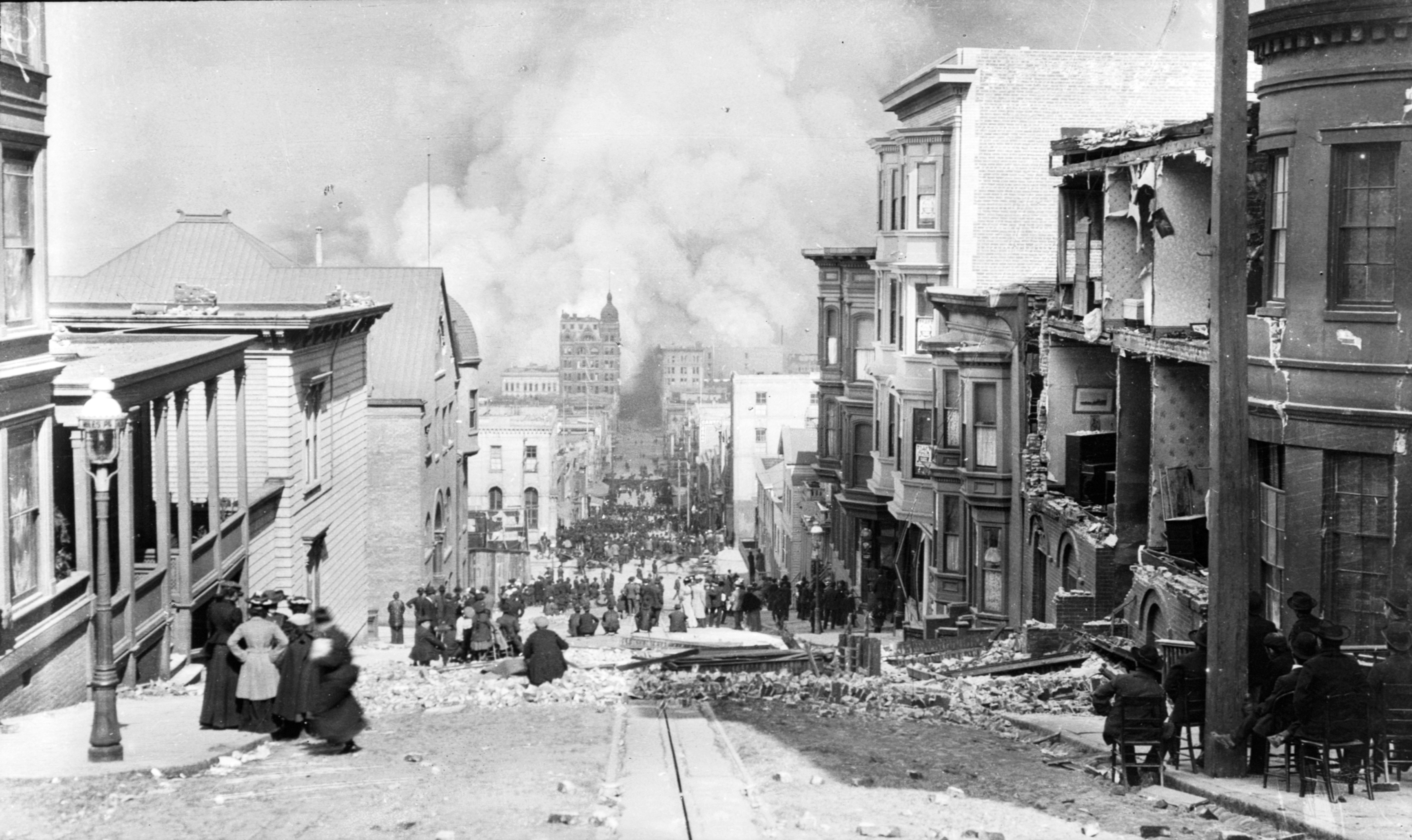
     Just this past week, on April 18, 2017, it was the 111th anniversary of the powerful San Fransisco Earthquake of 1906. It was a 7.8 magnitude earthquake that seemed to do the destruction of an even higher magnitude earthquake. While sources from 1906 say only 800 at the most had died from this earthquake, it did level hundreds of buildings in the San Francisco area and the fires from broken gas lines led to engulfing fires that destroyed most of what was left of the city.

Image result for San Francisco earthquake 1906

     However, what if none this earthquake actually didn't happen? Would our perception of what earthquakes can do change or our knowledge on earthquakes, especially on the San Andres Fault area?
     Well, we first need to take a look at what we gained and lost from this earthquake. For one of the few gains and most important ones from this earthquake, we were able to define the Elastic-Rebound Theory that defines earthquakes still today. This, founded by Henry Fielding Reid and according to this website , states that as rocks along both sides of a fault shift, form, and slightly move, energy from these actions is formed and causes these fault lines to a very slow rate change form until the internal strength within the fault line is exceeded.  It also, in a way, led to the creation of the golden Gate Bridge and what it is today. Because of that earthquake in 1906, builders of the Golden Gate bridge had to make it sustain powerful and destructive earthquakes.
     With this earthquake, there were many losses including destruction of the San Francisco city hall, destruction of hundreds of buildings, losses of almost 800 people, and many years of rebuilding to get the city back up. It cost lots of money to do this, but in the end, some of the rebuilding helped San Fransisco make more potent buildings capable of dealing with earthquakes today. However, there is still a great number of buildings that aren't sufficient to deal with earthquakes like that of 1906 even today.
     Now, if there was no earthquake of 1906, we would have not lost many innocent lives or many historical buildings from that time that we could preserve today. However, Henry Fielding Reid may not have made his elastic rebound theory as a result and vital knowledge of earthquakes would have not been found for years to come. The Golden Gate bridge might have also been around, but it would have been much weaker and more susceptible to earthquakes like the 1989 Loma Prieta Earthquake and any in the future.
Image result for san francisco earthquake 1989
(Oakland Bay Bridge Collapse)
     Overall, the San Fransisco earthquake of 1906 was needed in order for California and the rest of the world to be aware of what earthquakes can do, how they function, and how to make infrastructure capable of withstanding them. Without this earthquake, many lives would be saved in 1906, but would the number of lives saved be worth it in the next 111 years that lead up to today?


Sunday, April 16, 2017

Easter, The One Holiday That Severe Weather Happens Somwhere

    Any date from March 22- April 25, is when Easter can be. For that range of over a month, there is  the possibility of rain or snow in not only North America, but also Europe.
     In North America, just last year the U.S.A. experienced very severe thunder storms with near baseball size hail . These thunder storms bought lots of wind, lightning, and even a few tornadoes that flattened parts of towns.

Image result for easter severe thunderstorms 2016

     In this year too, the southern U.S. also had severe thunderstorms where damaging winds, hail and tornadoes caused destructive damage too. What is it with this destructive weather on Easter in the United States?
     Well, for one, Easter is in the early spring, a time close to prime for severe weather, especially in the southern United States. For the United States, warm fronts come through during the spring time and allow for almost summer like temperatures to come. Moisture from the gulf of Mexico enhances the area after the warm front crosses and the cold front crosses causing rain and strong to severe thunderstorms that can be destructive and cause lots of flooding especially right after the spring melt of the winter snow further north.
     In England, stormy weather this last year for Easter had also caused problems, but certainly not as bad as the United States. Los of rain over a period of a few days in northern England especially caused some flooding with rainfall totals near 50mm or 2 inches. This rainfall weren't the only issue as especially along the coast, strong winds caused minor tree damage and major airport delays. This storm system would have been ok to deal with a week later than Easter, but with millions of people in England traveling for the Easter holiday, it caused major travel problems and headaches.
     Easter weather in history throughout Europe and the United States can be a major problem with severe weather and torrential rains. However, even with this severe weather, most people can agree on one thing; at least it isn't snow. Just watch out next year when Easter is on April 1 in 2018. 

Friday, March 31, 2017

The Australian Cyclones. How bad are they?

March 27, 2017, tropical cyclone Debbie had hit Australia with close to 160 mph winds and bought lots of destruction to north eastern Australia. Over 52,000 were still without power three days after the storm. About 500 mm or about a half a meter of rain at the minimum fell in most of the area hit by Debbie. This rain has caused terrential floods and even has bought sharks into the streets in which no one sees everyday. While this was a tremendously strong storm in the first place, it raises the question of how bad has it been for Australia with cyclones?


                                    If we look back in history, there has been many cyclones that have hit Australia. There has been so many that are as strong or even stronger than Debbie. For example,  Cyclone Tracy, in the year 1974, 71 people were killed by the cyclone that bought lots of rain and close to 155mph or 250km per hour winds. It came right around Christmas time, and over 24,000 people were homeless after wards in northern Australia. Another bad cyclone was cyclone Ingrid in 2005 which didn't get that close to Australia to cause severe impacts. One thing about this storm may not be what it did, but how in the Atlantic Ocean there was a powerful hurricane named Ingrid that impacted Mexico as well. That raises the question that is should we have the same named retired in both the south pacific and Atlantic as you can see these two storms both named Ingrid caused huge impacts. However, these storms compared to the massive cyclone of 1899 that affected Australia are still not the worst Australia has seen. This cyclone named Mahina came right across northern Australia at Bathrust bay and killed over 400 people. A whole pearling fleet of 50 ships was destroyed from this storm and could not make it back to shore. Some Aborigines were also killed while trying to save some of the people or just by this unexpected storm in general. Radar at the time would have helped greatly decrease the number of deaths from this storms as the Great Galveston hurricane of 1900 also proved in the U.S.A.
    
The list of cyclones go's on and on for Australia, but it is safe to say that Australia has about as worse of a hurricane season or even worse hurricane season than the U.S.A., Mexico, and the Caribbean. Australia is just about as bad as Madagascar almost, but that is also true because of the greater amount of people affected by Australian cyclones compared to that of Madagascar. A cyclone is never any breeze; and anyone who has lived and been in the impact of a hurricane, typhoon, or cyclone can most likely say the same.


Thursday, March 23, 2017

Mini Ice Age 1816-1817, What if it didn't happen?

Global warming. This issue has been shown to be true and false since the late 20th century. However, has the term global cooling ever been used. Well, in history, it hasn't bee prevalent, but there are a few times in history where we have wondered is the Earth going to warm up? Well, in the years from 1816 to about 1818, winter was in full control. A huge volcanic eruption at mount Tambora in 1815 and in Indonesia that became the reason for this as global temperatures throughout the Earth stayed very below average throughout Europe and North America. The eruption was so big that it blackened or blocked some of the sun rays from getting into the earth causing very below average temperatures. Only in the month of July from places from England, France, to North America was there never any temperatures below the freezing mark. For the month of August alone, North America had freezes from Quebec to Washington D.C. while Europe had freezes right around the same time that hindered crop growth. Some might ask why didn't they plant crops earlier in the season, but that wasn't a possibility as freezes from the winter of 1815-1816 extended all the way to very late May or even early June as snow still sometimes fell. All of these freezes and early  snowfalls led to food shortages and people freezing to death as winters around this time were even harsher with highs and lows very close to if not like that of Siberia Russia or Alaska in the United States. These highs ranged from -5 Celsius to as low as -40 Celsius. This mini ice age cause many problems throughout Europe and North America as economies still mainly run on agriculture went down.
Image result for year without a summer


 However, what if this mini ice age didn't happen; would the world have done better? Well, there would have been better food production and higher temperatures that would have helped these European countries and the USA possibly industrialize and advance or recover further, especially after Napoleon's destruction of Europe along with France's own destruction. With England, they might have been able to profit more from Canada with an above average 1816-1819 which could have led to more of a reliance for England on Canada as a good economic booster and not a cold, frigid tundra. France could have been able to have more say in it's colony's and colonial areas that it still had as well with a better economy in France.

   All of these are major factors into figuring out if the year without a summer could have done if it was a year with a summer. Some could say that this year without a summer hit France very hard because of Napoleon himself and his belligerent ways of conquering and running over all of Europe for himself so France could run Europe. Some might see this year without a summer as payback to France. The year without a summer hindered everyone and everything in the world with the huge problem of a mini ice age. Now, this problem has shifted to being the heat age in which we don't know if it is mini or huge. One thing for sure, you will need to stay cool and stay warm for whatever comes your way as mother nature has a mind of it's own.

Thursday, March 16, 2017

March Snowstorms: Eastern North America vs Western North America

Image result for winter storm stella
On March 14, just two days ago, the northeast, at least a majority of it, got hit by a huge snowstorm. in Windsor Locks CT, 15.5 inches was recorded while at Binghamton New York, a whopping 28 inches of snow at least was recorded. This was the monster storm as you can see on visible satellite and in this 13 minute video.


These snow totals shattered records for the snowiest storms on record in the month of March in the eastern United States. However, the question becomes is the month of March really that bad for eastern North America? For eastern North America, cities like New York New York, Boston, and Philadelphia  rarely have over a foot of snow in March. In fact, April actually had a bigger snow storm than all of the snowstorms of March with the April Fools Day blizzard of 1997. In cities like Quebec City, Halifax, and St. John's Canada, heavy snow storms are still a great possibility with temperature hovering around the freezing mark for most of the month. Snowstorms in these cities have bought close to or over two feet in the past. However, it is not the snowiest month of the year on average. In fact, a place where it is the snowiest part of the year is western North America. While it doesn't include places like Alaska and the provinces of north western Canada, it does include the areas around the north western and north central  United States along with parts of south western Canada. They usually see much more snow than the east overall for the year with some areas like Jackson  Hole Wyoming getting over 400 inches in a year! Besides the great lakes region of the U.S., this much snow isn't usually reported. In this region of Wyoming, North Dakota, Montana, and Idaho, the month of March serves to be the snowiest on average with over half of the days in the month usually having some sort of snowfall. In Calgary Canada, March is also the snowiest month with about 10 days of it having some sort of snow and about 23in of their 123 inch yearly snowfall falling then. For biggest snowstorms in western North America, many storms have been over days with one storm fro March 14-16 2016 in Jackson Hole Wyoming totaling 41 inches of snow. other places in the west have had huge snow storms like thees while the east has rarely had that. In the west, a 40 inch snow storm is a normal, but in the east, it is a extreme. The east may have some big snow storms that get lots of news for the amount of people being affected in March, but the west, with their much smaller population, is disregarded even though their snow totals are far more in March.


Wednesday, March 8, 2017

Madagascar Cyclones. Are they often?

Just recently in Madagascar, a powerful tropical cyclone Enawo hit and ravaged the country. It came in as a powerful category 3 storm or around 115 mph winds and ravaged the northern coast of Madagascar. It came with powerful winds, rainfall up to a foot and a half, and high storm surge as you can see in the video below.


However, is this normal for Madagascar to see? Well, in actuality, it is. On average, for Madagascar, it is rare to go a season without a tropical cyclone hitting the country. In 2007, that definitely wasn't the case where 5 tropical cyclones hit Madagascar from December of 2006 to April of 2007. One of these was Cyclone Indlala which gave Madagascar category 4 winds and ravaged the most populated areas of the country. Not only was 2007 a bad year, but in 2014, a category 3 strength storm also hit Madagascar. In years past like in 2016 and 2015, weaker tropical cyclones have hit as well with a lot of rain as most cyclones do. However, these aren't the only years where cyclones hit; it is almost every year, one hits. Going back in history for Madagascar, it is hard to find a calm seasons where they didn't get hit by a storm. Cyclone Ivan, in 2008, was another powerful category 4 storm that hit and ravaged Madagascar for example. The list go's on and on, but if you look at other places around the world ravaged by hurricanes; none of them match to what Madagascar has to always go through including even the United states and Japan. The Philippians may be one exception however since they  also have strong, frequent typhoon seasons (same as a cyclone season) like Madagascar. The only difference is Madagascar has it's major cyclone season in December through April while the Philippians have it from late August to November. Overall, if you ever plan on going to Madagascar for it's exotic animals and beauty, don't go in January through April, especially March through April, or you'll be greeted by an unexpected and unwelcome guest.

Monday, February 20, 2017

The Snowy February 9

     Every year, the northeastern United States and eastern Canada experience at least one good snowstorm. Many living here wonder when will the piles of snow come or when that frigid cold air will come to support snowfall. there has been one particular date that every few years, it has only bought a ton of snow, and that is, you guessed it, February 9. Now, there may be no direct relation that 100% shows it snows on February 9, but it is worth it to look back and see what has happened on this date in recent history in eastern North America. For example, just a few weeks ago, a perfect storm that went over the 40 degrees north latitude and 70 degrees west longitude spot dropped up to 1-2ft and possibly more in areas from Philadelphia Pennsylvania to St. John's Nova Scotia. While it may have been February 10 by the time it dropped it's last snowfalls in North America, it still snowed right around February 5-February 12. In 2013, a huge snowstorm/winter storm Nemo/ winter Charlotte dropped over 3ft of snow in Hamden Connecticut and dropped over 1-2ft all the way up to Newfoundland. Back on February 7, 1978, almost February 9, another huge snow storm dumped over 2ft of snow in northeastern North America from areas in New Jersey all the way to Newfoundland. These storms are just a few that have happened on February 9 in Eastern North America. However, these storms listed above are some of the worst and heaviest snowstorms to strike eastern North America. This just go's to show you that February 9 is a date that can be like a Friday the 13th in northeastern North America.