Sunday, April 23, 2017

What if there was no San Fransisco Earthquake of 1906?

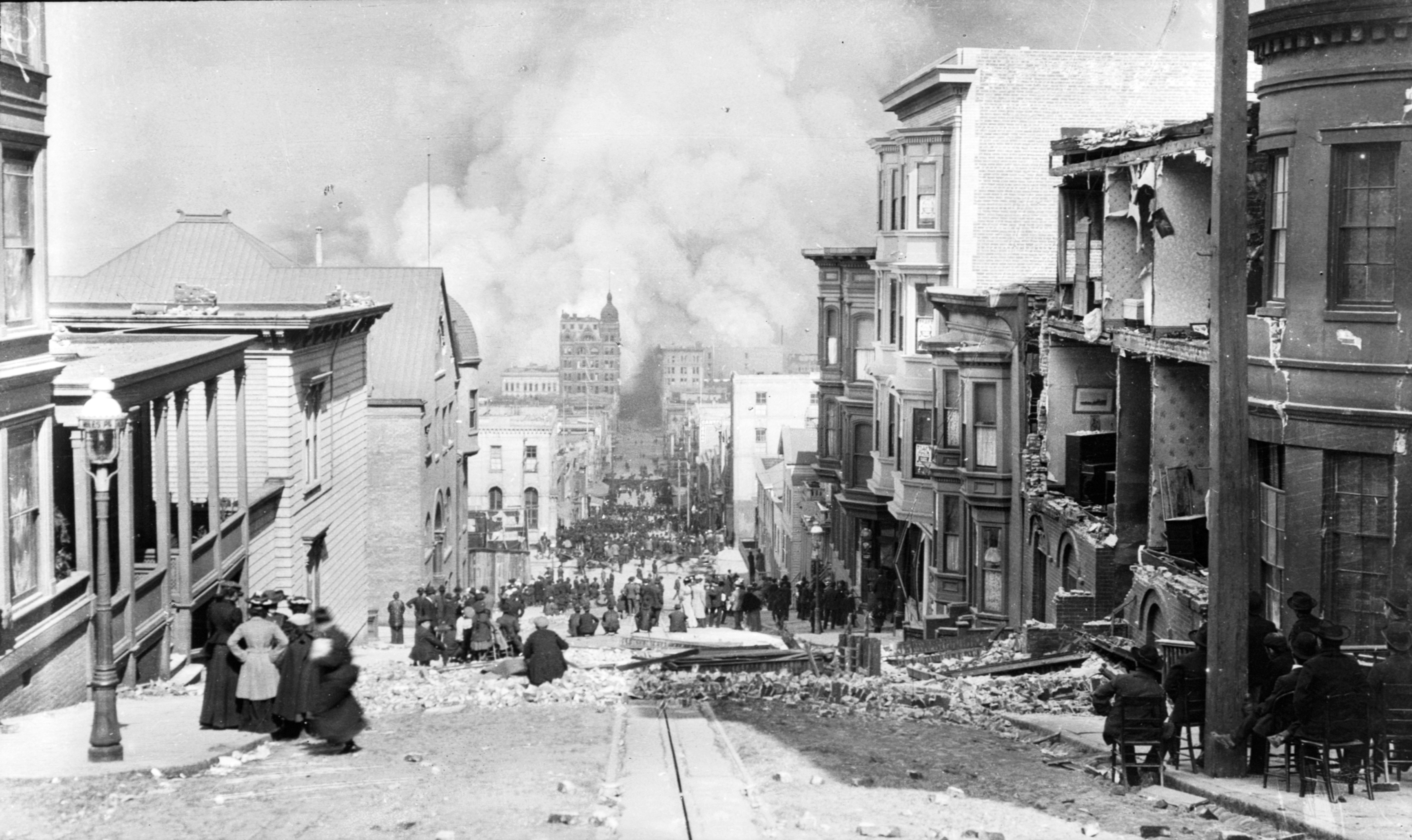
     Just this past week, on April 18, 2017, it was the 111th anniversary of the powerful San Fransisco Earthquake of 1906. It was a 7.8 magnitude earthquake that seemed to do the destruction of an even higher magnitude earthquake. While sources from 1906 say only 800 at the most had died from this earthquake, it did level hundreds of buildings in the San Francisco area and the fires from broken gas lines led to engulfing fires that destroyed most of what was left of the city.

Image result for San Francisco earthquake 1906

     However, what if none this earthquake actually didn't happen? Would our perception of what earthquakes can do change or our knowledge on earthquakes, especially on the San Andres Fault area?
     Well, we first need to take a look at what we gained and lost from this earthquake. For one of the few gains and most important ones from this earthquake, we were able to define the Elastic-Rebound Theory that defines earthquakes still today. This, founded by Henry Fielding Reid and according to this website , states that as rocks along both sides of a fault shift, form, and slightly move, energy from these actions is formed and causes these fault lines to a very slow rate change form until the internal strength within the fault line is exceeded.  It also, in a way, led to the creation of the golden Gate Bridge and what it is today. Because of that earthquake in 1906, builders of the Golden Gate bridge had to make it sustain powerful and destructive earthquakes.
     With this earthquake, there were many losses including destruction of the San Francisco city hall, destruction of hundreds of buildings, losses of almost 800 people, and many years of rebuilding to get the city back up. It cost lots of money to do this, but in the end, some of the rebuilding helped San Fransisco make more potent buildings capable of dealing with earthquakes today. However, there is still a great number of buildings that aren't sufficient to deal with earthquakes like that of 1906 even today.
     Now, if there was no earthquake of 1906, we would have not lost many innocent lives or many historical buildings from that time that we could preserve today. However, Henry Fielding Reid may not have made his elastic rebound theory as a result and vital knowledge of earthquakes would have not been found for years to come. The Golden Gate bridge might have also been around, but it would have been much weaker and more susceptible to earthquakes like the 1989 Loma Prieta Earthquake and any in the future.
Image result for san francisco earthquake 1989
(Oakland Bay Bridge Collapse)
     Overall, the San Fransisco earthquake of 1906 was needed in order for California and the rest of the world to be aware of what earthquakes can do, how they function, and how to make infrastructure capable of withstanding them. Without this earthquake, many lives would be saved in 1906, but would the number of lives saved be worth it in the next 111 years that lead up to today?


Sunday, April 16, 2017

Easter, The One Holiday That Severe Weather Happens Somwhere

    Any date from March 22- April 25, is when Easter can be. For that range of over a month, there is  the possibility of rain or snow in not only North America, but also Europe.
     In North America, just last year the U.S.A. experienced very severe thunder storms with near baseball size hail . These thunder storms bought lots of wind, lightning, and even a few tornadoes that flattened parts of towns.

Image result for easter severe thunderstorms 2016

     In this year too, the southern U.S. also had severe thunderstorms where damaging winds, hail and tornadoes caused destructive damage too. What is it with this destructive weather on Easter in the United States?
     Well, for one, Easter is in the early spring, a time close to prime for severe weather, especially in the southern United States. For the United States, warm fronts come through during the spring time and allow for almost summer like temperatures to come. Moisture from the gulf of Mexico enhances the area after the warm front crosses and the cold front crosses causing rain and strong to severe thunderstorms that can be destructive and cause lots of flooding especially right after the spring melt of the winter snow further north.
     In England, stormy weather this last year for Easter had also caused problems, but certainly not as bad as the United States. Los of rain over a period of a few days in northern England especially caused some flooding with rainfall totals near 50mm or 2 inches. This rainfall weren't the only issue as especially along the coast, strong winds caused minor tree damage and major airport delays. This storm system would have been ok to deal with a week later than Easter, but with millions of people in England traveling for the Easter holiday, it caused major travel problems and headaches.
     Easter weather in history throughout Europe and the United States can be a major problem with severe weather and torrential rains. However, even with this severe weather, most people can agree on one thing; at least it isn't snow. Just watch out next year when Easter is on April 1 in 2018.